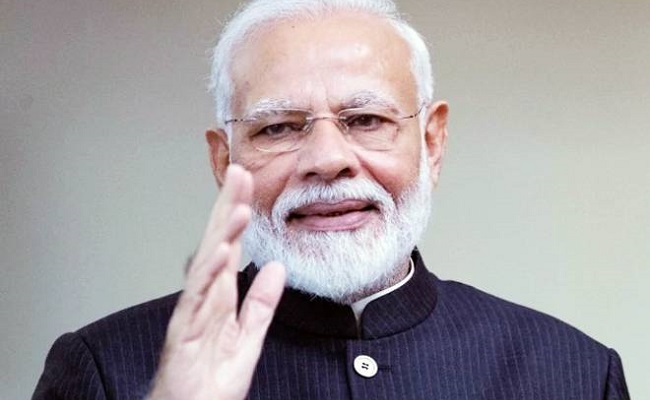
Prime Minister Narendra Modi’s speech in Hyderabad, in which he urged Indians to avoid buying gold for a year, reduce foreign travel for tourism, and increasingly adopt work-from-home practices, appears to have triggered significant nervousness in the stock markets.
Sectors directly linked to discretionary spending and mobility were hit particularly hard during today’s trading session.
Travel and airline stocks, hotels and hospitality companies, commercial real estate firms, and petroleum and fuel-linked sectors all witnessed notable declines as investors reacted sharply to the possible economic implications of such messaging.
The concern in the markets seems to stem from fears of reduced consumer spending, weaker travel demand, declining office space utilization, and lower fuel consumption if such behavioral shifts are encouraged at a national scale.
Following the market reaction, efforts at damage control now appear to be underway, with attempts being made to reassure investors and calm fears regarding the broader economic outlook.
What Prime Minister Narendra Modi is essentially saying is this; India must save dollars during a difficult global situation.
Because of the Iran war and rising crude oil prices, India now has to spend much more money buying oil from other countries. India imports nearly 88% of its crude oil needs. All these payments are made in US dollars.
At the same time, India also imports massive amounts of gold. In FY26 alone, India imported nearly $72 billion worth of gold. Since most gold is imported, every jewellery purchase indirectly sends dollars out of India.
This creates pressure on India’s foreign exchange reserves, which currently stand around $690 billion. If too many dollars go out, the rupee weakens further, imports become costlier, and fuel prices can rise even more.
That is why the Prime Minister asked people to avoid buying gold for one year if possible.
Even if gold imports reduce by 30-40%, India could save $20-25 billion. Those saved dollars can instead be used to buy essential crude oil and fuel.
In simple terms; fewer gold imports mean fewer dollars leaving India, better control over fuel costs, and less pressure on the economy during global uncertainty and also lesser pressure on rupee value.
However, many people feel the government could have handled this more quietly and strategically instead of making a direct public appeal that created panic and confusion.
Rather than openly asking citizens to stop buying gold, the government could have introduced silent corrective measures such as restricting excessive retail supply, increasing monitoring mechanisms, or using policy tools to gradually reduce demand without triggering public commotion.
Because once such an appeal is made publicly by the Prime Minister himself, it naturally creates anxiety about the country’s economic condition and raises fears among investors and ordinary citizens alike.
Following Modi’s speech, many people also began questioning the government’s own spending priorities. Citizens on social media are asking why austerity should begin only with the public.
Many are demanding tighter control over government expenditure, reduction in ministerial luxuries, and limits on expensive convoys, private jet usage, and VIP spending.
Some are even questioning the need to increase the number of MPs in Parliament if it eventually puts greater pressure on the public exchequer.
For many observers, the speech may have intended economic caution, but politically and psychologically, it appears to have unsettled both the markets and sections of the public.