The Trump administration’s latest move to treat adjustment of status as an “extraordinary discretionary benefit” and push Green Card applicants towards consular processing abroad is expected to face immediate legal challenges, immigration attorneys say.
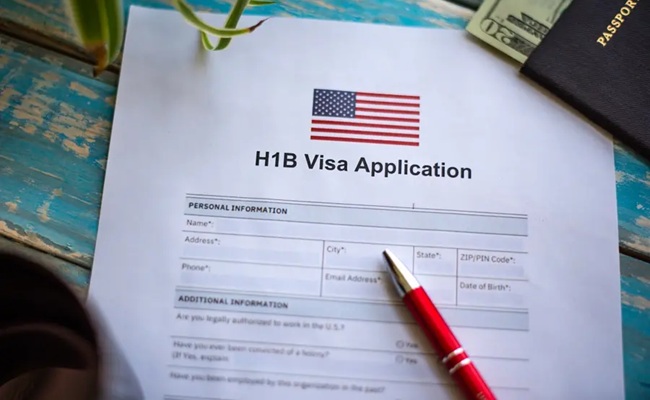
The policy could also disrupt the H-1B-to-Green Card pathway through adjustment of status, a route relied upon by lakhs of Indians living and working in the United States.
A memo issued on Friday by the US Citizenship and Immigration Services directs officers to treat adjustment of status as an “extraordinary form of relief.”
It says applicants should generally pursue immigrant visas through US consulates abroad, instead of obtaining Green Cards from within the US.
Kripa Upadhyay, partner at law firm Buchalter, said the memo is likely to be challenged in court soon.
According to her, it is in direct conflict with the Administrative Procedure Act, which requires a proposal to be issued, public comments to be invited, and those comments reviewed before a final policy is rolled out.
Immigration attorneys warn that the policy appears aimed at exclusion. They say forcing applicants to go abroad could expose them to the doctrine of consular non-reviewability, under which visa denials by consular officers are extremely difficult to challenge in court.
Lawyers also pointed to a footnote in the memo that could significantly change the treatment of dual-intent visa holders such as H-1B and L-1 workers.
With more than 12.6 lakh Indians, including dependants, waiting in employment-based Green Card categories, the memo has triggered deep anxiety across the Indian diaspora.
Until now, eligible H-1B holders could file Form I-485 for adjustment of status and complete the Green Card process from within the US itself.
Jacksonville-based immigration attorney Ashwin Sharma said the Trump administration appears to acknowledge dual intent on paper, but weakens it through the memo’s language.
He said the footnote suggests that simply maintaining lawful status in a dual-intent non-immigrant visa category may no longer be sufficient on its own to receive a favourable exercise of discretion.
According to Sharma, the new policy may require repeatedly vetted professionals to submit additional discretionary evidence to prove why they deserve to remain in the US, instead of being forced abroad to file their immigrant applications and face massive consular backlogs.
Rajiv S Khanna, managing attorney at Immigration.com, said officers may now expect applicants to create an affirmative record showing why they deserve adjustment of status while staying in the US.
“My immediate advice to Indian nationals with pending I-485 cases: do not withdraw. Build an affirmative record now of your taxes, your contributions, your family ties, your professional standing and other evidence of roots in the US,” he said.
Khanna also referred to the Supreme Court’s 2022 decision in Patel v Garland, which limited federal court review of many factual findings in adjustment cases. He said whatever record applicants build at the USCIS level may effectively become the only record that matters.
According to some media reports, factors such as national interest and economic benefit may also be considered while deciding whether an applicant deserves adjustment of status inside the US.
Immigration attorneys say the alternative of consular processing is impractical for many Green Card applicants. US consulates in India are already burdened with H-1B stamping delays, and forcing Green Card applicants into the same system could lead to longer waiting periods, job disruption, family separation and serious hardship.
For Indian H-1B workers waiting for Green Cards, the message is clear: the pathway that was already long and uncertain may now become even more complicated.