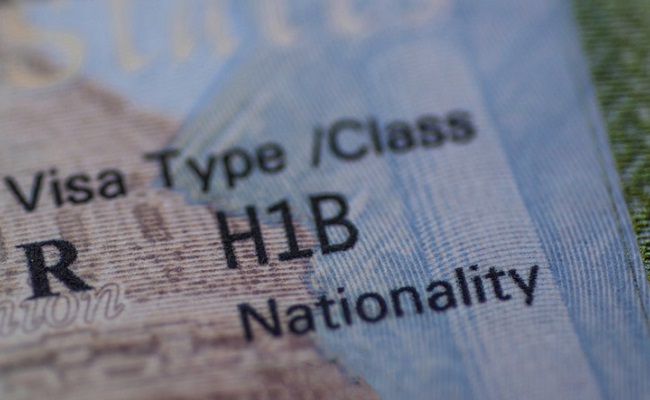
The Trump administration has fired another missile at the H-1B programme, this time in the form of a proposed $103,265 fee. The courts may eventually block it, and the Indian government may protest.
But perhaps India should do the opposite: urge the United States to end the H-1B programme altogether.
The reason is simple. This deeply flawed visa system is hurting American workers, Indian professionals and even the image of India itself.
The United States has always benefited enormously from immigration. It attracts some of the world’s brightest minds. Indian engineers, scientists, doctors and entrepreneurs have built companies, created jobs, made breakthroughs in medicine and technology, and gone on to lead some of America’s biggest corporations.
But they succeeded not because of the H-1B system, but often despite it.
The H-1B visa was originally designed to fill genuine shortages of specialised talent. Over the years, however, it has also become a tool for labour arbitrage.
Some outsourcing firms built entire business models around these visas. Questionable recruiters and body-shopping firms have also been accused of exaggerating experience, inflating résumés and placing workers in jobs for which they may not always have the required skills.
American companies have also benefited from this arrangement.
When a worker’s immigration status depends heavily on an employer, that worker has far less bargaining power. Changing jobs can become complicated. Promotions, transfers and immigration filings can create additional risks.
As a result, many H-1B workers hesitate to demand better salaries, reject assignments or leave poor working conditions.
For Indian workers, the green-card backlog has made this even worse.
Because of per-country limits, many Indians face extraordinarily long waits for permanent residency. Until then, they remain tied to temporary visa status and constantly worry about layoffs.
If an H-1B worker loses a job, the current system generally gives only a limited period to find another employer or change status before having to leave the country.
That creates enormous pressure on families who may have spent years building their lives in America.
Ironically, large technology companies frequently lobby for more H-1B visas, but there is far less enthusiasm for reforms that would quickly give long-term workers green cards and greater freedom in the labour market.
American Workers Also Pay the Price
The other side of the story is the impact on experienced American workers.
Many have spent decades building careers. They have mortgages, children in college, healthcare expenses and families depending on their income.
When such employees are laid off and replaced by younger or cheaper workers, the impact can be devastating.
In some controversial cases, American workers have even alleged that they were asked to train their replacements before leaving.
For an older employee, losing a job can wipe out savings, threaten health insurance and seriously disrupt family finances.
Age discrimination is also a long-standing concern in the technology industry, where experienced employees generally command higher salaries.
Displaced American workers therefore have legitimate reasons to be angry when they see fraud, labour arbitrage or misuse of the visa system.
The problem is that this anger often spreads beyond those responsible.
Indian-Americans who have followed the rules — doctors, researchers, professors, entrepreneurs, scientists and highly skilled engineers — can also become targets of resentment.
The debate then moves beyond visas and jobs.
Indians are mocked over their accents, food and culture. Their loyalty to the United States is questioned. Even people who have lived in America for decades and contributed enormously to the country can suddenly be treated as outsiders.
Abuse of the H-1B system gives extremists and racists an excuse to target an entire community for the actions of a few companies, recruiters and applicants.
The result is a system in which some Americans resent Indians, Indian workers feel trapped, while employers and intermediaries continue to benefit.
Why Should India Defend This System?
From India’s perspective, there is little reason to strongly defend a programme that can exploit its own citizens and damage their reputation abroad.
The H-1B system has increasingly become a burden on the credibility of skilled immigration.
Ending it may not be the disaster for India’s IT-services industry that many imagine.
The country’s major IT companies have already reduced their dependence on H-1B workers substantially. They have hired more Americans locally, moved more work offshore and built delivery centres around the world.
Ending H-1B visas could increase costs and cause short-term disruption, but the larger business model has already been changing.
There is another uncomfortable reality.
Many of the technology jobs people believe are being transferred from Americans to Indians may not eventually return to American workers at all.
Artificial intelligence is rapidly automating the very work that once powered the outsourcing industry — software testing, maintenance, documentation and even programming.
The same AI tools that allow an Indian IT company to complete a project with fewer engineers in Bengaluru also allow an American company to do the same with fewer employees in Boston or California.
A project that once required 100 engineers may soon require only 30.
The remaining 70 jobs may not move from India to America.
They may simply disappear.
That is why ending H-1B could actually force the United States to confront the bigger issues facing its workforce.
If technology companies continue cutting jobs even after foreign hiring is reduced, politicians will no longer be able to conveniently blame Indian workers.
America will have to confront automation, age discrimination and the way corporations treat experienced employees.
At the same time, the United States needs a better skilled-immigration system.
When America truly needs exceptional talent from abroad, those workers should be treated as potential future Americans rather than temporary, employer-dependent labour.
They should have greater freedom to change employers, start companies and build permanent lives.
India, meanwhile, has little to gain from defending a visa programme that traps many of its citizens, damages the reputation of Indian professionals and fuels resentment against the wider Indian-American community.
If the H-1B programme finally disappears, both Indians and Americans may ultimately have more reasons to celebrate than mourn.