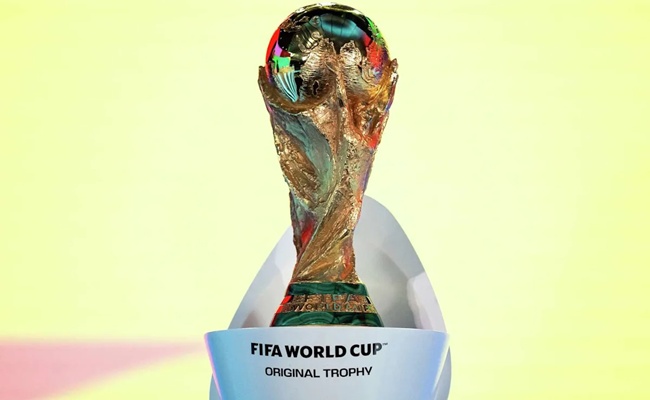
The FIFA World Cup is not just delivering massive audiences — it is also setting up a fierce media bidding war.
Netflix, Disney and YouTube are reportedly preparing to challenge Fox for the US broadcast rights to the 2030 and 2034 men’s World Cups, with Amazon and Apple also seen as possible contenders.
Talks between FIFA and potential media partners are expected to begin within the next three months.
This time, FIFA is considering selling English- and Spanish-language US rights together as one package, instead of splitting them as in previous tournaments.
That move could push the price sharply higher.
Fox reportedly paid $485 million for English-language rights to the 2026 tournament, while Telemundo paid around $600 million for Spanish-language coverage.
Now, media executives are reportedly budgeting between $1.5 billion and $2 billion for the US rights to each future World Cup.
Netflix, Disney and YouTube see the tournament as a powerful way to attract streaming subscribers and advertisers.
Disney could also use ESPN and ABC, giving FIFA a mix of streaming and traditional television reach. Netflix already has a growing relationship with FIFA after securing rights to the Women’s World Cup in 2027 and 2031.
Amazon and Apple could also shake up the contest. Amazon already owns UEFA Champions League rights in the UK, while Apple holds global MLS rights.
The booming interest is being driven by huge World Cup audiences in the US.
Recent matches have produced numbers comparable to major NFL playoff games.
The US victory over Bosnia and Herzegovina reportedly averaged more than 26 million English-language viewers, with another 9.8 million watching through Telemundo or Peacock.
The US-Belgium game was estimated to have drawn a combined audience of 47.9 million across English and Spanish coverage.
Even matches without the US team are delivering massive numbers. More than 11 million viewers reportedly watched Portugal against Croatia on Fox.
There is one challenge.
The 2030 World Cup will be staged in Morocco, Portugal and Spain, while Saudi Arabia will host the 2034 edition. Both tournaments will have less favourable time zones for US viewers than the current North American World Cup.
Even so, the ratings boom is likely to send prices soaring.
With Netflix, Disney, YouTube and possibly Amazon and Apple circling, the next World Cup rights deal could become one of the biggest sports media battles in history.