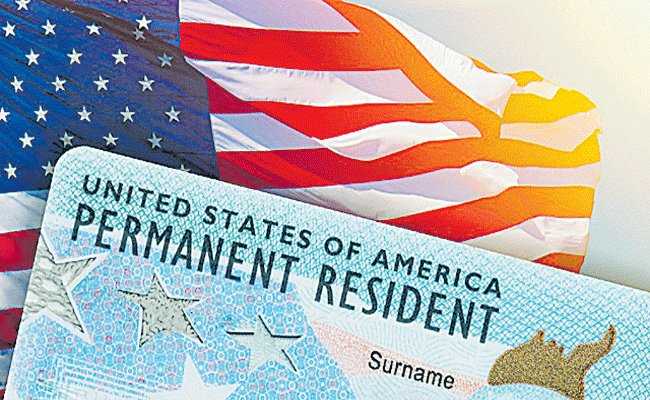
A Green Card gives an immigrant permanent resident status in the United States. However, under a new rule announced by the Trump administration, applicants could be denied permanent residency if immigration officers believe they are likely to depend on government assistance.
The policy is based on the “public charge” principle, which allows authorities to reject visa or Green Card applications when an applicant is considered likely to become primarily dependent on public benefits.
What Is the New Green Card Rule?
On July 16, 2026, the Department of Homeland Security cancelled the 2022 public charge rule and issued a new final regulation.
DHS said the previous rule was inconsistent with the intention of Congress and placed excessive restrictions on immigration officers while assessing whether an applicant could become dependent on the government.
The new rule restores broader powers to immigration officials. Officers will be allowed to consider all relevant facts and circumstances before deciding whether an applicant is likely to become a public charge.
This means Green Card applicants may have to provide stronger evidence showing that they can support themselves financially and are unlikely to rely heavily on taxpayer-funded assistance.
Factors such as income, assets, employment, health, age, education, family circumstances and past use of certain public benefits may be considered during the assessment.
New Form I-485 Required
US Citizenship and Immigration Services will issue a revised version of Form I-485, which is used to apply for permanent residency from within the United States.
Older editions of Form I-485 that are submitted or postmarked on or after September 18, 2026, will not be accepted.
The new public charge rule will also take effect on September 18, 2026.
Applicants filing on or after that date must ensure that they use the latest form and provide all required financial and supporting documents.
What Applicants May Need to Prove
Under the new framework, applicants may be required to demonstrate that they are financially self-sufficient and are not likely to become a burden on the government.
Immigration officers may examine whether an applicant is likely to depend on benefits such as government-funded cash assistance, housing support, food assistance or long-term institutional care.
However, receiving a public benefit may not automatically result in denial. Officers are expected to consider the applicant’s complete financial and personal situation before making a decision.
History of the Public Charge Policy
The Trump administration first promoted a broader public charge policy in 2018, arguing that immigrants should be financially self-reliant.
The policy was implemented in February 2020 during Donald Trump’s first presidential term. Immigration rights groups strongly criticised it, describing it as a “wealth test” that could unfairly disadvantage low-income immigrants.
The Biden administration later reversed the policy and introduced a narrower public charge rule in 2022.
The Trump administration has now cancelled that rule and restored wider discretion for immigration officers.
US Citizenship and Immigration Services said the change reaffirms the importance of self-reliance, protects public resources and ends policies that encourage dependency on American taxpayers.
The new rule is expected to increase scrutiny of Green Card applications and require applicants to submit stronger evidence of income, employment, assets and financial stability.