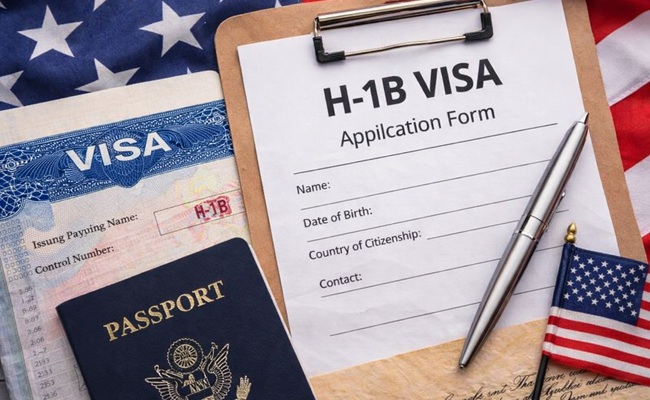
In another major H-1B development, President Donald Trump has signed a new Executive Order directing federal agencies to closely examine whether companies sponsoring H-1B workers have recently laid off, or are planning to lay off, similarly situated American employees.
The order, issued on September 18, directs the Department of Labor (DOL), Department of Homeland Security (DHS) and Department of State (DOS) to consider an employer's layoff history while reviewing Labor Condition Applications, H-1B petitions, visa applications and the entry of H-1B workers into the United States.
Under the order, agencies must take into account whether an H-1B sponsoring employer directly or indirectly carried out layoffs during the previous year or is planning future layoffs that negatively affect similarly situated U.S. workers.
The move could bring substantially greater scrutiny to technology companies, outsourcing firms and other employers that continue sponsoring H-1B workers while simultaneously reducing their U.S. workforce.
Old H-1B Filings Could Also Come Under Review
The Executive Order goes beyond future H-1B applications.
It directs the Labor Department's Wage and Hour Division to begin reviewing data associated with previously submitted Labor Condition Applications within 30 days and determine whether further action against sponsoring employers may be warranted under existing immigration law.
This means companies could potentially face questions not only over new H-1B filings but also over their previous sponsorship activity.
More Government Agencies To Share H-1B Data
The administration is also expanding coordination between federal agencies.
DOL, DHS and the State Department are directed to consult with the Departments of Commerce and Education as well as the Small Business Administration.
Those agencies can provide information involving wages, employment conditions, academic qualifications, industry trends and other economic factors relevant to administration of the H-1B program.
The White House said the order is intended to strengthen H-1B program integrity and increase scrutiny in cases where American workers may have been displaced.
Layoffs Could Now Become an Important H-1B Factor
Until implementation guidance is released, the practical impact on individual cases will depend on how DOL, DHS and DOS apply the new directive.
However, the language of the order makes one thing clear: an employer's recent and planned layoffs are now specifically identified as information federal agencies should consider when handling H-1B-related applications, petitions, visas and entry decisions.
Companies undertaking major workforce reductions while filing H-1B cases could therefore face additional scrutiny as the agencies implement the order.
Don't Confuse This With the $100,000 H-1B Proclamation
Importantly, this Executive Order is separate from another H-1B action announced by the White House on September 18.
The separate Presidential Proclamation extends for another 12 months restrictions connected with a $100,000 payment for certain H-1B workers seeking entry into the United States, subject to specified exceptions. The extended restriction takes effect September 21, 2026 and runs until September 21, 2027.
Therefore, two separate H-1B actions were announced:
The Executive Order: focuses on layoffs, increased employer scrutiny, interagency data sharing and review of previously filed LCAs.
The Proclamation: focuses on the $100,000 payment requirement and entry restrictions affecting certain H-1B workers.
For employers as well as H-1B professionals, the distinction is important because the two measures operate separately and address different aspects of the H-1B program.