Many are familiar with the world-famous book Rich Dad Poor Dad, written by Robert Kiyosaki and Sharon Lechter. But that is not our topic today. Thanks to Telangana Chief Minister Revanth Reddy, we now have another similarly striking phrase to discuss, “Rich God and Poor God.”
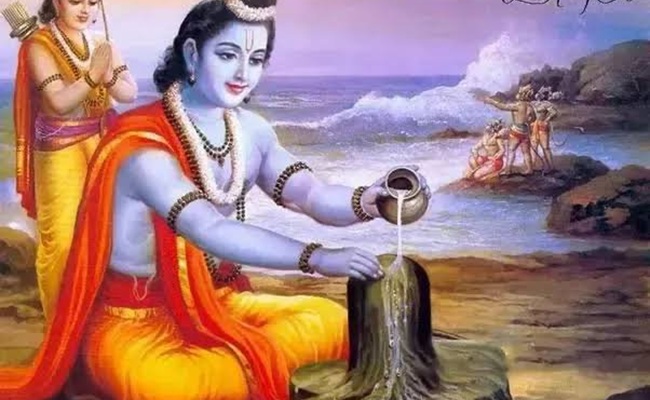
Revanth Reddy’s recent remarks describing Lord Shiva as the god of the poor and Lord Rama, an incarnation of Vishnu, as the god of the rich have triggered considerable political debate.
Revanth Reddy argued that the BJP identifies with Lord Rama and therefore represents the interests of the wealthy. But the rich-versus-poor categorisation of Shiva and Vishnu does not stand up well to Hindu philosophy, mythology or history.
At the metaphysical level, Shiva and Vishnu represent complementary and inseparable principles. Shiva is associated with Kaala, the eternal time, while Vishnu represents the infinite space and the all-pervading order of existence. Human existence itself unfolds within time and space; separating Shiva and Vishnu into opposing economic categories therefore becomes philosophically difficult.
The Puranic tradition provides equally striking counterexamples. Kubera, the divine treasurer and lord of wealth, is traditionally associated with Shiva and described as a great devotee of him. In one popular account, Shiva grants Kubera immense wealth and establishes him as the lord of riches. Ravana, too, is portrayed in the epic tradition as a powerful ruler and devotee of Shiva. Thus, Shaiva devotion clearly cannot be equated with poverty.
The same applies to Vaishnavism. Lord Vishnu is inseparably associated with Lakshmi, the goddess of wealth, prosperity and abundance. Yet many celebrated devotees of Vishnu and Rama lived lives of simplicity and austerity. Bammera Pothana, devoted to Lord Rama, chose a life of relative austerity while producing the celebrated Telugu Andhra Mahabhagavatamu. Sudama, the celebrated devotee and friend of Krishna, is another classical example of devotion existing without material prosperity.
Conversely, Srinatha Mahakavi, associated with Shaiva devotion, enjoyed considerable material prosperity during much of his life.
In contemporary times, spiritual figures such as Sadhguru Jagadish Vasudev have also built substantial institutions around Shaiva and yogic traditions.
Therefore, Hindu tradition offers devotees of Shiva and Vishnu across the entire spectrum, from kings and the immensely wealthy to ascetics and the materially poor. Reducing either deity to a “rich man's god” or “poor man's god” is an oversimplification of a far more complex spiritual tradition.