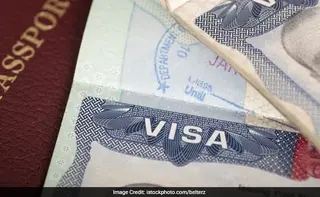
For years, the US immigration journey for many Indians followed a familiar path: study on an F-1 visa, work through OPT, secure H-1B sponsorship and, for some, eventually apply for permanent residency.
That pathway still exists, but experts say every stage is becoming more difficult and uncertain.
Saurabh Arora, founder and CEO of University Living, said the route is becoming “more selective” rather than completely broken.
“The pathway from studying in the US to building a long-term career is becoming more complex,” Arora said.
For Indian students, admission to a US university is now only the first step.
After graduation, they need to move through Optional Practical Training (OPT), find a suitable job and, in many cases, convince an employer to sponsor an H-1B visa.
Arora said OPT remains an important bridge between education and employment, but long-term career prospects increasingly depend on employer demand and H-1B sponsorship.
As a result, students are looking beyond university rankings and paying more attention to employability, internships, practical experience, networking and post-study work opportunities.
The US continues to attract a large number of Indian students. Open Doors 2025 recorded 363,019 Indian students in the US during the 2024-25 academic year.
At the same time, there are signs of caution among new applicants.
According to figures cited by Arora, a NAFSA-JB International analysis found a 17% decline in new international student enrolments in Fall 2025. The IIE Spring 2026 Snapshot also found that 61% of responding US institutions reported lower application volumes from India.
Arora said this does not mean Indian students are abandoning the US. Instead, policy stability, post-study work opportunities and the possibility of building a long-term career are becoming more important in the decision-making process.
International students also remain important to the US economy. According to NAFSA-JB International figures cited by Arora, they contributed $42.9 billion and supported more than 355,000 jobs in 2024-25.
F-1 Rules Add More Pressure
Another concern is the move away from the “Duration of Status” system.
Arora said this could particularly affect PhD students and others whose academic programmes take longer than expected because of delays, programme changes or additional coursework.
Such students may need to apply for an extension before their authorised period expires.
“This makes it important to track both academic programme dates and immigration admission dates from the beginning,” Arora said.
He stressed that this does not make studying in the US impossible, but students will need to pay much closer attention to immigration timelines, compliance and long-term planning.
According to him, the traditional “study, work, settle” model can no longer be treated as an automatic progression.
EB-5 Investors Also Face Deadlines
For Indian investors seeking permanent residency through the EB-5 programme, the challenges are different, but timing remains critical.
Piyush Gupta, vice president for India and the Middle East at CanAm Enterprises, said unreserved EB-5 categories remain backlogged, while set-aside categories for rural and high-unemployment projects currently remain without a backlog for Indian-born applicants.
He highlighted two important dates for investors.
The first is September 30, 2026, which he described as an important grandfathering deadline for application protection.
The second is January 1, 2027, when the minimum investment amount is expected to rise from $800,000 because of an inflation adjustment.
According to Gupta, Indian nationals now account for around 23% of new EB-5 filings.
He also warned that set-aside categories could eventually face retrogression if demand continues to rise, though he said that is unlikely before September 30.
For Indian students, the biggest challenge is increasingly the journey from classroom to career.
For investors, it is about timing, eligibility and changing investment requirements.
The US immigration ladder has not disappeared. But for Indians hoping to climb it, every rung now requires more planning, caution and attention than before.