For the past few years, Telugu filmmakers have increasingly looked towards Hindu mythology, ancient traditions, temple mysteries and warrior themes, hoping to attract not just Telugu audiences but also the massive Hindi market.
But is the formula beginning to fail?
The weak opening of Nagabandham, starring Virat Karrna, has once again triggered that uncomfortable debate in Tollywood.
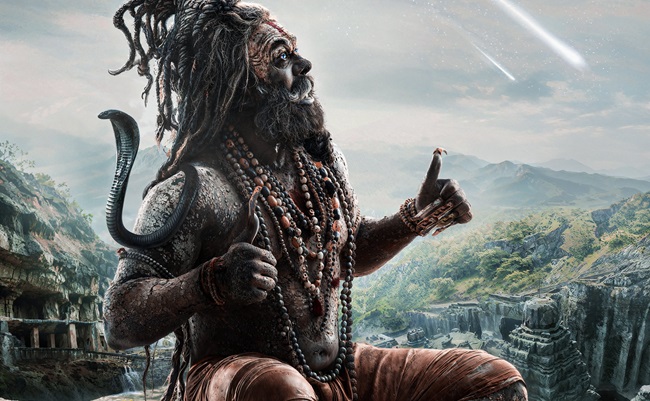
Mounted on a reported budget of nearly Rs 100 crore, the socio-fantasy adventure arrived with considerable hype around its mystical and Sanatana Dharma-based elements.
However, the film has reportedly managed only around Rs 4 crore share in its first two days, including roughly Rs 30 lakh from the Hindi heartland.
With mixed word-of-mouth and a massive investment to recover, the film now faces a steep uphill battle.
The problem is that Nagabandham is not an isolated case.
Even major stars have struggled to turn Hindu religious and warrior themes into guaranteed box-office gold.
Balakrishna’s Akhanda 2 and Pawan Kalyan’s Hari Hara Veera Mallu were expected to benefit from strong spiritual and Hindu cultural themes. Yet, according to industry circles, neither film managed to create the kind of nationwide box-office storm that many had expected.
Similarly, Kannappa, despite its devotional subject and star-heavy casting, failed to create major magic in the Hindi belt.
This has raised a serious question inside the industry: Are Tollywood filmmakers overestimating the commercial power of Sanatana Dharma-based content?
“We make Hindu warrior films thinking North Indian audiences will automatically connect with them. But that strategy has failed badly in recent times,” a senior producer said on condition of anonymity.
According to him, filmmakers are increasingly assuming that saffron visuals, temple backdrops, Sanskrit chants, mythological references and Hindu warrior characters are enough to attract the Hindi market.
But audiences appear to be demanding much more.
The spectacular success of films rooted in Indian mythology and tradition may have created the impression that any project with a Hindu cultural backdrop can become a pan-India hit.
In reality, only a few films have managed to successfully combine strong storytelling, emotion, scale and mass appeal.
That may be the real problem.
Sanatana Dharma itself may not be losing appeal. But films using it as a shortcut to create hype could be facing rejection.
Audiences are perhaps no longer willing to buy a ticket just because a trailer shows temples, divine weapons, ancient secrets or a warrior fighting in the name of dharma.
Without a gripping story and strong emotional connect, the religious packaging alone may not be enough.
Nagabandham’s performance has now become the latest warning sign.
For Tollywood producers dreaming of the North Indian market, the message may be brutal but clear: Sanatana Dharma can add flavour to a film, but it cannot save a weak product.
The formula is not dead.
But blind faith in the formula certainly appears to be failing.