Movie: Maremma
Rating: 1.5/5
Banner: Moksha Arts
Cast: Maadhav B, Deepa Balu, Vinod Kumar, Roopa Laxmi, Vikas Vasishta, Dayanand Reddy, and others
Music Directors: Prashanth R. Vihari, Bipradeep Dutta
DOP: Prasanth Ankireddy
Editor: Sai Babu Talari
Producer: Mayur Reddy Bandaru
Written and Directed by: Manchala Nagaraj
Release Date: September 10, 2026
Ravi Teja’s nephew Maadhav makes his acting debut with Maremma, a film that has attracted some attention mainly because of his family connection.
Let’s look at its merits and demerits.
Story
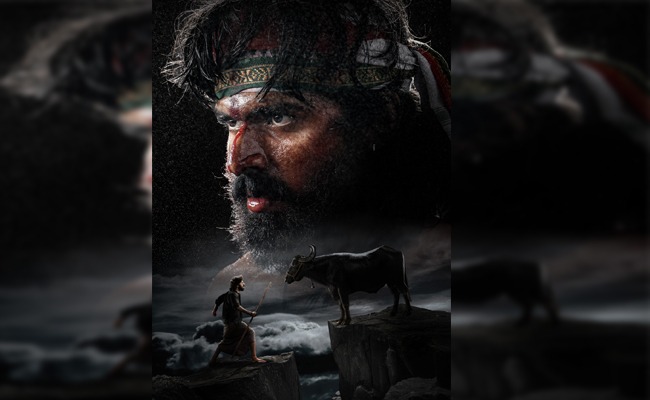
Set in a village in Warangal district in the early 2000s, Maremma revolves around the village deity Maremma Talli, who is deeply revered by the villagers. As the annual jathara approaches, a bison named Maari is raised to be offered as a bali to the deity.
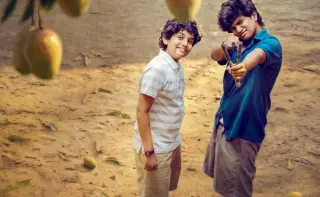
Karni (Maadhav) takes care of Maari and develops a strong bond with the animal. Jalandhar, a wealthy landlord from a neighbouring village, holds a grudge against Karni after being humiliated by him with Maari’s help.
Seeking revenge, Jalandhar kidnaps the bison with the help of an occult practitioner (Roopa Laxmi). He manages to take Maari out of the village, but the animal escapes soon after.
With the jathara approaching, Karni and the villagers begin searching for Maari, while Jalandhar is determined to find and kill the bison before they do.
Will Karni find Maari? That forms the rest of the story.
Performances
Maadhav, Ravi Teja’s nephew, is tall and lanky, but he struggles badly as an actor. His expressions remain weak throughout, and he looks completely miscast as a Telangana village youngster.
Deepa Balu is comparatively better, but her character is poorly written and does not offer her much scope to perform.
Vinod Kumar appears in a few scenes as the village elder and has little to do.
Vikas Vasishta is adequate as the antagonist.
Roopa Laxmi is the only actor who makes a noticeable impression with her performance.
Technical Aspects
With a weak story and screenplay, the music directors try to create some energy through the background score. The songs are passable.
The cinematography and production design are below standard, while the editing does little to improve the film’s slow pace.
Highlights
Nothing much
Drawbacks
Poor performance by the lead actor
Weak writing and narration
Lack of engaging scenes
Analysis
Maremma is another addition to the growing list of Telangana village-based period dramas made in recent years. While such a backdrop can provide a strong setting, only films with a solid script and engaging narration manage to work. A rural setting alone cannot make a story interesting.
Maremma, written and directed by Manchala Nagaraj, falls short on both counts.
The basic story itself does not offer much novelty. The makers claim that the film is inspired by real incidents, but whether the story is real or fictional, the central conflict does not have enough strength to sustain a feature-length film.
Several elements have also been explored in other films. Pottel, for instance, dealt with a similar setting and subject with far more conviction.
The bigger problem is the writing. The director struggles to create scenes that hold the audience’s attention.
There are attempts at humour, but they rarely work. One such sequence involves a character named Razak taking money to arrange a male companion for a female buffalo, while a couple simultaneously tries to have an illicit affair. The humour feels forced and fails to evoke laughs.
The romantic track between Maadhav and Deepa Balu, who play bava-maradalu, is another weak link. Their relationship is poorly developed and presented. A better-written romantic track, supported by catchy songs, could at least have added some entertainment value.
After the interval, the film largely revolves around the search for the missing bison. The narrative repeatedly returns to the same point, with very little progression until the climax.
With Maadhav’s expressionless performance, weak narration and ineffective humour, Maremma, set in 2006, ultimately turns into a tedious watch.
Bottom Line: Sorry