The heavy rains that lashed Hyderabad on Tuesday evening, inundating roads and disrupting traffic across several parts of the city, have once again highlighted a critical lesson for emerging urban centres such as Amaravati.
The lesson is: world-class cities are built not merely with roads, towers and flyovers, but with robust drainage and flood-management systems capable of withstanding extreme weather events.
Videos of vehicles stranded in waterlogged streets quickly went viral on social media, reviving concerns over Hyderabad's capacity to handle intense rainfall despite decades of infrastructure investment.
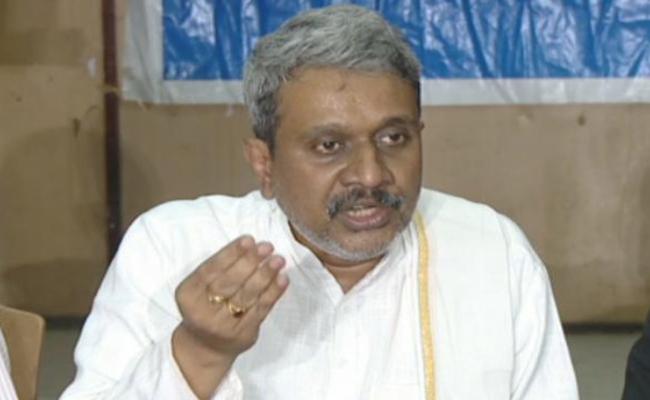
The scenes also serve as a reminder that urban flooding remains a challenge even for some of India's most developed metropolitan cities like Amaravati Commenting on the issue, Andhra Pradesh Intellectuals Forum convener Chalasani Srinivas said Amaravati should carefully study the experiences of established cities such as Hyderabad, Chennai and Mumbai while shaping its future growth.
According to him, urban planning must anticipate not only population growth and real estate expansion but also the increasing frequency of extreme weather events.
Srinivas noted that Hyderabad has repeatedly demonstrated resilience throughout its history, overcoming major crises ranging from plague outbreaks and cholera epidemics to the Spanish Flu pandemic and the devastating floods of the Musi River.
The city's ability to recover and continue growing reflects the importance of constant infrastructure upgradation, he said.
Despite thousands of crores of rupees being spent on roads, water supply networks, metro rail systems and other civic infrastructure over the years, Hyderabad continues to face drainage-related challenges during periods of intense rainfall.
Srinivas pointed out that some drainage pipelines dating back nearly a century are still in operation, underscoring the need for continuous modernization of urban infrastructure.
He cautioned that rapid urban expansion often places unforeseen pressure on civic systems.
While high-rise developments and large-scale construction are essential for accommodating growing populations, city planners must simultaneously strengthen stormwater drainage networks, preserve natural water channels and create adequate flood-mitigation mechanisms.
According to Srinivas, Hyderabad's development has been shaped by successive governments and political leaders over several decades.
“Major projects such as the Outer Ring Road, international airport, drinking water schemes and transport infrastructure were planned and implemented across different administrations, demonstrating that city-building is a long-term process,” he said.
Drawing a comparison with Amaravati, Srinivas argued that the proposed capital city still has a unique opportunity to avoid many of the mistakes that older metropolitan centres are now attempting to correct.
Unlike Hyderabad, Chennai and Mumbai, which evolved over decades under different planning frameworks and now support populations exceeding one crore each, Amaravati remains in its formative stage with a relatively small population spread across a vast geographical area.
He said the capital city should incorporate advanced flood-management measures from the outset, including scientifically designed drainage systems, water-retention structures, flood-diversion channels and protection of natural waterways.
“Such planning would become increasingly important as Amaravati expands in the coming decades,” he said.
Srinivas pointed out that despite flood flows exceeding 11 lakh cusecs along the Krishna River near the Amaravati region in recent years, surrounding villages remained largely unaffected.
However, he stressed that future urbanization would require much stronger flood-management infrastructure to ensure that the capital remains resilient during extreme weather conditions.
He expressed confidence that ongoing irrigation diversion projects and reservoir construction in the region would significantly reduce future flood risks.
At the same time, he said the extensive canal network planned in the capital region could eventually support inland water transport and recreational activities if integrated properly into the city's urban design.
He emphasized that Hyderabad and Amaravati should not be viewed as competitors. Instead, Amaravati should learn from Hyderabad's successes as well as its challenges.
“If those lessons are incorporated at an early stage, Amaravati could emerge as one of the most well-planned and flood-resilient capital cities developed in India during the 21st century,” Chalasani said.