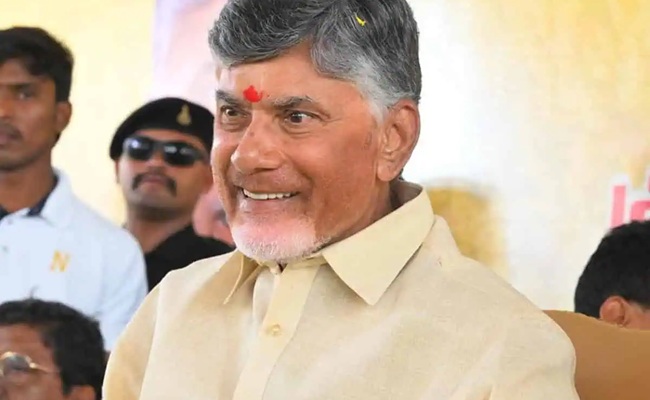
The Chandrababu Naidu government’s decision to reintroduce direct elections for municipal chairpersons and mayors is being seen as a calculated political risk by the Telugu Desam Party, particularly its working president and Andhra Pradesh IT Minister Nara Lokesh.
While the exact reasoning behind the move is not fully clear, the outcome of the local body elections could become an important test of Lokesh’s growing leadership within the party.
Under the direct election system, voters will directly elect municipal chairpersons and mayors, instead of councillors choosing them after the elections.
The system was first introduced by then Chief Minister N.T. Rama Rao in 1986. It was later changed in 2005 during the Y.S. Rajasekhara Reddy government, when the indirect election system was brought back.
The indirect system gave ruling parties more room to influence councillors and secure municipal chairperson and mayor posts. Despite that advantage, Chief Minister N. Chandrababu Naidu has now chosen to return to direct elections.
The decision is significant because Naidu has seen the risks of direct local body elections in the past.
Municipal elections were held under the direct system in 1995 and 2000 in undivided Andhra Pradesh, soon after strong TDP victories in the 1994 and 1999 Assembly elections.
In 1994, the Congress was reduced to just 26 seats in the 294-member Assembly. Yet, within a year, it recovered strongly in the municipal elections.
Similarly, after the TDP-BJP alliance won 190 Assembly seats in 1999, the Congress reportedly managed to secure around half of the municipal and Zilla Parishad chairperson posts in the local elections held the following year.
These examples showed that voters can make very different choices in Assembly and local body elections within a short period.
The present TDP-led coalition government has now completed more than two years in office. While Naidu and Lokesh have been highlighting the government’s performance, there are also complaints at the grassroots level over corruption, local irregularities and the functioning of some legislators.
At the same time, the YSR Congress Party, which was reduced to 11 seats in the 2024 Assembly elections, has remained active through protests and political programmes and could try to use the local elections to rebuild its strength.
The TDP is also going through a generational transition, with Lokesh playing an increasingly important role in the party.
However, there are reports that some senior leaders and long-time workers feel sidelined, while newer and financially stronger leaders have gained influence.
This could become important in local elections, where grassroots organisation and committed party workers play a major role.
It is not clear how much weight these factors carried when the government decided to bring back direct elections.
The TDP leadership has increasingly been relying on surveys, data analysis and feedback from officials, technical teams and Lokesh’s close political circle.
If those assessments show strong public satisfaction with the government, the leadership may believe that direct elections will allow voters to directly endorse the ruling coalition.
Whatever the calculation, the municipal elections could become a major political test for Lokesh.
A strong performance by the TDP and its allies would strengthen his position within the party.
But if the alliance performs poorly because of anti-incumbency, dissatisfaction with MLAs, weak grassroots mobilisation or resentment among senior leaders, the result could create fresh political pressure for the leadership.