


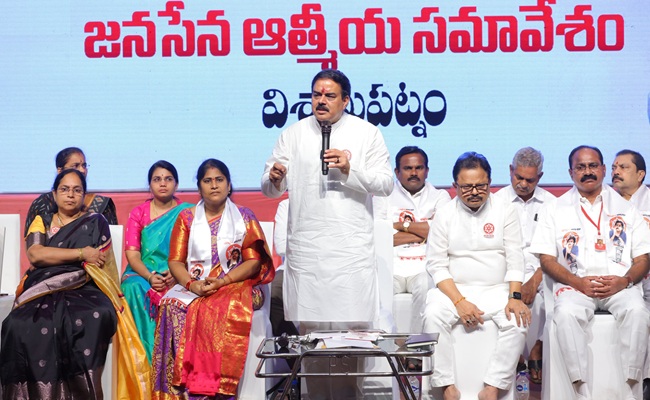
After more than 12 years in politics and two years in government as part of the ruling alliance, Jana Sena workers had every reason to expect that the party would now demand a much bigger share in the upcoming local body elections.
Instead, the message from the leadership is once again about patience, limited expectations and contesting only where the party is considered strong.
Jana Sena Political Affairs Committee chairman Nadendla Manohar has said the party should focus on “winnable seats” and avoid getting carried away by numbers.
He also said no seats or candidates have been finalised and that decisions will be taken after assessing local conditions and consulting NDA partners.
That explanation may sound practical from an alliance point of view. But for the cadre, it also raises an uncomfortable question: if Jana Sena is still not organisationally strong enough to aggressively demand seats after more than a decade, when exactly will it be?
The party has repeatedly spoken about strengthening its grassroots structure. In August, Manohar even asked workers to aim for a “100 per cent strike rate” and said committees would assess the party’s strengths and weaknesses constituency by constituency.
But a 100 per cent strike rate sounds impressive only when the number of seats being contested is meaningful.
That is where the frustration within sections of the cadre becomes understandable.
Workers spend years carrying party flags, mobilising crowds, attending meetings and defending the leadership on the ground.
Naturally, many expect that organisational growth should eventually translate into political opportunities - ward seats, municipal posts, local leadership positions and a larger share in elections.
If the final message is still “don’t ask for too many seats,” the leadership may have to explain what exactly the cadre has been building towards all these years.
There has already been confusion over the seat-sharing formula. Earlier, remarks attributed to TDP leader Nara Lokesh triggered discussion that the 2024 Assembly ratio could continue in local polls.
Jana Sena later made it clear that the old formula would not automatically apply and said local strength should determine seat allocation. Pawan Kalyan has also publicly indicated that the party expects better representation based on local conditions.
That leaves the cadre hearing different shades of the same argument: Jana Sena deserves more space, but it should also remain cautious; the party is growing, but its organisational strength must still be assessed; workers should prepare aggressively, but they should not assume that preparation will result in more tickets.
This contradiction is becoming difficult to ignore.
For a party that presents itself as an alternative political force, the local body elections are not merely about maintaining harmony within the NDA. They are also a test of whether Jana Sena can build an independent grassroots political structure.
If it continues to depend heavily on alliance calculations even at the ward and village level, critics are likely to question whether the party is expanding as an organisation or simply functioning as a junior partner within a larger coalition.
The leadership may argue that discipline and patience are essential for long-term growth. That is a valid political strategy.
But after 12 years, the cadre may reasonably ask for something more concrete than another lesson in patience.
For Jana Sena, the real challenge is no longer just winning the seats it contests. It is proving to its own workers that their years of mobilisation are eventually going to translate into political space.


