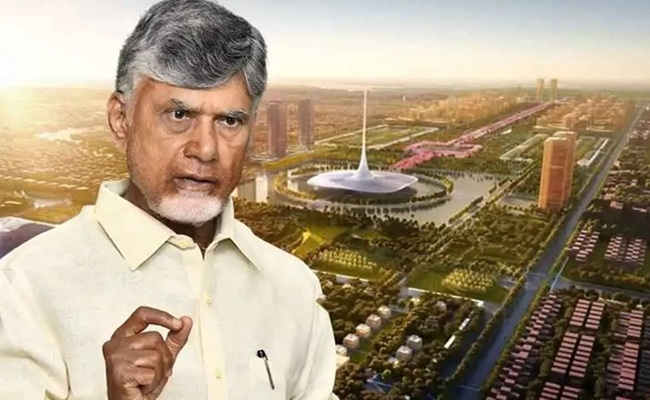
Known for his media-savvy approach and efforts to attract national and international attention, Telugu Desam Party president and Andhra Pradesh Chief Minister N Chandrababu Naidu appears to be giving a fresh global push to his Amaravati capital city project.
The latest example is a detailed feature on Amaravati published by The New York Times on August 13 under the headline, “One Man’s Quest to Build India’s Most Livable City.”
The article places Chandrababu Naidu and his vision for Amaravati at the centre of the city’s story.
The prominence given to Amaravati in an international publication has triggered discussion in political and administrative circles over whether this is part of Naidu’s larger publicity strategy or an effort to build global visibility and international credibility for the capital city project.
The significance of such international coverage is not merely about the number of people who read the article, but also about how Amaravati is being presented to the outside world.
Instead of being portrayed simply as Andhra Pradesh’s new administrative capital, Amaravati is being projected as a futuristic urban development project focused on technology, sustainability, mobility and innovation.
Such international media exposure could therefore become an important part of the government’s broader strategy to brand Amaravati globally and attract investment.
The international branding of Amaravati also has a strong political dimension for Chandrababu Naidu.
The New York Times reportedly presents Amaravati as Naidu’s personal “redemption project” and part of his political legacy, linking the city’s development to his earlier association with Hyderabad and the political consequences of Andhra Pradesh’s bifurcation in 2014.
Naidu has long projected himself as a technology-oriented administrator associated with Hyderabad’s development.
Amaravati now gives him an opportunity to build a second major urban-development narrative — this time by creating a capital city from the ground up.
The latest New York Times feature can therefore be seen not just as another report on Amaravati, but as part of a wider effort to take the capital city’s story to an international audience.