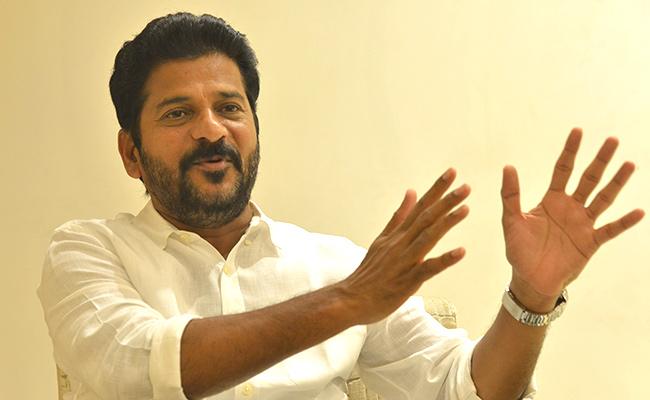
The reasons given by the Centre for denying political clearance to Telangana Chief Minister A. Revanth Reddy’s proposed visit to the United States are not convincing, according to political analysts.
The decision has triggered debate in political circles, as the Union Ministry of External Affairs (MEA) has not clearly explained why permission was denied.
According to the MEA, political clearance was refused because the programme and itinerary submitted for the US visit were not considered appropriate to the office held by the Chief Minister and the stated purpose of the visit.
However, the expression “not appropriate” does not necessarily mean that the visit itself was improper.
According to a senior political analyst, in the context of diplomatic clearances, the term may refer to whether the proposed programme, schedule and engagements are considered suitable for the office of the dignitary and the stated purpose of the visit.
Foreign visits by Chief Ministers and other senior constitutional and political functionaries are assessed by the MEA before political clearance is granted. The ministry has indicated that certain aspects of Revanth Reddy’s proposed US programme did not conform to established norms.
The exact reasons, however, have not been explained publicly in detail.
One possible issue could be the manner in which the itinerary was submitted and the clarifications provided later. The proposed visit was reportedly intended to include meetings with leading US educational institutions and other engagements aimed at promoting Telangana’s interests.
The Telangana government had planned engagements with institutions such as Harvard University, the Massachusetts Institute of Technology and other prominent educational institutions. The visit was also linked to investment and educational initiatives.
Questions are therefore being raised over why the programme was not presented in a way that satisfied the Centre’s requirements and whether there was any delay in providing clarifications sought by the MEA.
Several political explanations have emerged after the denial of clearance.
One theory linked the proposed US visit to an Indian Overseas Congress event in New York. However, attending a programme involving the Indian diaspora is not, by itself, unusual for an Indian Chief Minister visiting the United States.
There has also been speculation that Revanth Reddy was trying to meet US President Donald Trump or Vice President J.D. Vance. Such high-level meetings, however, would normally require coordination with the Union government and the MEA.
Major diplomatic, trade, defence and economic engagements between India and the United States are generally handled through the Union government and the relevant central ministries.
There have also been political claims that the denial of clearance reflects instability within the Telangana Congress or challenges to Revanth Reddy’s leadership. These, however, remain political speculation and have not been established as reasons for the MEA’s decision.
The MEA generally does not disclose every internal consideration behind decisions on political clearance. Once the ministry takes such a decision, the proposed foreign visit cannot proceed in its planned form.
There have been instances in the past when Chief Ministers and other senior leaders were denied political clearance for foreign visits. These include leaders such as Mamata Banerjee, Arvind Kejriwal, Pinarayi Vijayan, former Assam Chief Minister Tarun Gogoi and Bhagwant Mann.
The denial of clearance to Tarun Gogoi, who was the Congress Chief Minister of Assam, during the UPA period in 2012 is also cited as an example to show that such decisions are not necessarily limited to governments led by a particular political party.
Against this backdrop, the denial of clearance to Revanth Reddy should not automatically be seen as a major political confrontation between Telangana and the Centre.
For now, the precise reason for the MEA’s objection remains unclear beyond its official statement that the proposed itinerary and programme were not considered appropriate to the office and purpose of the visit.