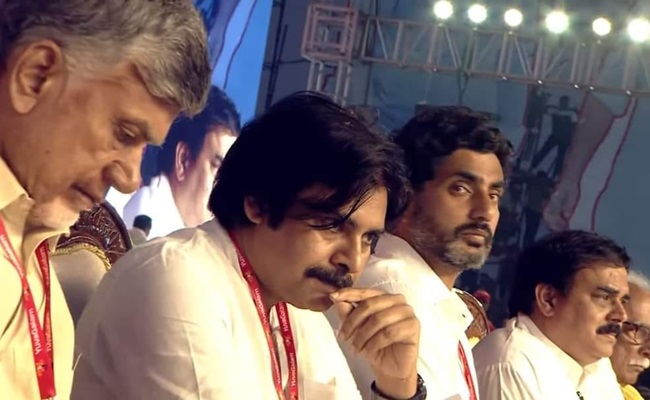
With local body elections in Andhra Pradesh approaching, the TDP and Jana Sena leadership is expected to focus more on coordination and winning ability than on rigid seat-sharing percentages.
According to TDP leaders, seat allocation is likely to depend on local factors such as cadre strength, organisational presence and the availability of strong candidates.
“The focus will be on winning the elections, irrespective of which alliance partner contests a particular seat,” a TDP leader said.
Political observers say coordination between the two parties could prove more important than the party symbol itself in local elections.
The bigger challenge, however, may come after seat-sharing is finalised. Both parties will need to ensure smooth transfer of votes and full cooperation from their respective cadres.
If TDP workers fail to support Jana Sena candidates in seats allotted to the latter, or if Jana Sena cadre does not fully back TDP candidates, the alliance could struggle despite arriving at a seat-sharing formula.
So far, neither party has publicly demanded a fixed share of seats. However, some discontent is reportedly visible among sections of the TDP cadre over comments made by certain Jana Sena leaders.
Similarly, sections of Jana Sena are also said to have reservations about the functioning of the alliance.
Pawan Kalyan has repeatedly said that Chandrababu Naidu should remain Chief Minister for 15 years, but such remarks are reportedly not being viewed positively by every section of the Jana Sena rank and file.
The local body elections could therefore emerge as a major test of whether the two parties can keep internal differences aside and work together effectively at the grassroots level.
Unlike the 2024 Assembly elections, Jana Sena is expected to seek a larger share of seats this time, particularly in areas where the party believes it has a strong organisational base.
Pawan Kalyan has indicated that the party will seek representation in areas where its cadre is strong and that the interests of Jana Sena workers should be protected.
The immediate questions are how many seats Jana Sena can secure through negotiations and whether both parties can jointly convert those seats into victories.
A senior minister is understood to have observed that coordination between the TDP and Jana Sena could be a bigger challenge for the alliance than the YSRCP itself.
There are also concerns that any serious differences during the local polls could eventually affect the coalition ahead of the next Assembly elections.
Meanwhile, Jana Sena has already stepped up its preparations.
At a meeting of the party’s local elections committee, Jana Sena Political Affairs Committee chairman and Minister Nadendla Manohar said the party should aim for a 100 per cent strike rate.
He said Pawan Kalyan had prepared a 30-day action plan and instructed party leaders to adopt a strategy specifically suited for local elections.
Jana Sena has also asked its leaders to assess party strength at the ward and division levels, identify strong candidates and collect feedback directly from the grassroots.
Since the party is part of the ruling coalition, seat-sharing and coordination with the TDP will remain central to the exercise.
The local elections will now test not just the electoral strength of the two parties, but also how effectively the TDP-Jana Sena alliance can function at the ground level.