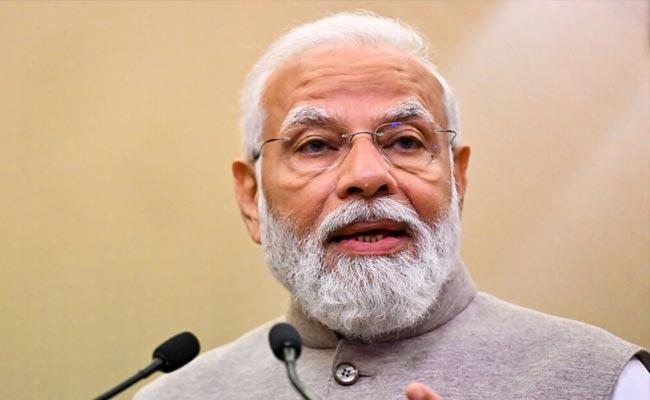
Prime Minister Narendra Modi became one of India’s most influential leaders because he focused on problems governments had ignored for decades.
Digital revolution, Online Payments, Roads, hospitals, toilets, LPG connections, electrification, banking access, welfare delivery, housing and basic infrastructure reached millions of people who had long remained outside the system. His leadership was built on large-scale execution and visible delivery.
Under his government, India’s national highways expanded dramatically, airport infrastructure more than doubled, metro networks spread across cities, and large projects such as coastal roads and major bridges reshaped urban connectivity.
Welfare systems were digitized, subsidies began reaching citizens directly through bank accounts, and free food grain support became a lifeline for millions. For many Indians, this was the first time governance felt visible in everyday life.
This was the first phase of India’s transformation, building the country’s physical and administrative foundation.
Modi’s execution-driven style was highly effective for this stage. He functioned like a large-scale nation builder, focused on delivery, implementation and system expansion. That phase is now nearing completion.
The challenge before India today is fundamentally different. The next phase will not be defined by roads and welfare alone, but by artificial intelligence, semiconductors, next level digital infrastructure, advanced manufacturing, intellectual property creation and deep-tech innovation.
The countries leading the future economy are not just building infrastructure; they are building technological dominance.
India risks falling behind in this transition. Research and development spending remains far lower than major global economies. The country’s massive IT services sector faces disruption from AI-driven automation, while global investors are increasingly shifting attention toward nations and companies leading in advanced technologies. The gap becomes clearer when technology companies in countries like South Korea generate profits larger than entire sectors of Indian industry.
India still depends heavily on services rather than innovation-led production. Without stronger domestic AI capabilities, semiconductor ecosystems and globally competitive product companies, economic growth may continue without generating enough high-value jobs.
The issue is not whether Modi failed. He accomplished what India urgently needed during a critical stage of development. He built the foundation. But foundations alone cannot define a nation’s future.
India now requires leadership capable of driving the next technological leap, leadership that understands AI, frontier technologies, innovation ecosystems and the demands of a rapidly changing global economy.
The next decade has to determine whether India becomes a true technology power or remains a large market dependent on innovations created elsewhere.
The biggest challenge before Prime Minister Narendra Modi today is the changing global economic and geopolitical environment, along with the increasingly cautious support India is receiving from major global powers and investors.
Concerns have also grown over India’s recent slip in global GDP rankings, the weakening rupee against the dollar, rising inflation, pressure on the Sensex, and growing economic anxiety among the middle class and young population.
Anti-incumbency sentiments fueled by unemployment concerns, social media-driven political narratives, and the rise of aggressive online opposition ecosystems are steadily adding pressure on the BJP government.
These developments are giving fresh momentum to opposition parties and alliance politics against BJP rule.
Yet, the larger question remains unanswered; do these signals indicate the beginning of the end for Modi’s political dominance, or will he once again reinvent his leadership and chart a new path for India’s growth in a rapidly changing world?
The answer to that will unfold in the years ahead.
Written By Kiran Sharma