


All of a sudden, the Cockroach Janta Party appears remarkably quiet. Just weeks ago, it dominated social media conversations.
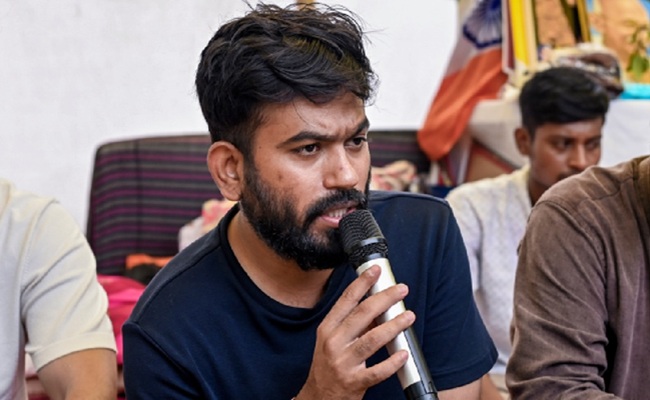
Its founder, Abhijeet Dipke, became the face of a dramatic youth campaign. What began as a satirical online platform soon became a street movement.
We all know how the campaign reached Jantar Mantar in Delhi. Hundreds and later thousands of supporters gathered there.
The central demand was the resignation of Education Minister Dharmendra Pradhan. After weeks of agitation, Pradhan resigned on July 25. CJP celebrated the development as a major victory.
But what happened after that is striking. The movement lost much of its earlier visibility. The noise on social media has considerably reduced.
The national conversation has moved elsewhere. For a group that presented itself as the voice of an angry new generation, the sudden silence raises questions about its staying power.
The bigger question is whether CJP represents a broad youth mood or a highly active fringe. Social media can magnify a movement enormously.
Viral posts can create an impression of mass support. But online visibility is not the same as representative public opinion. That distinction matters when judging any youth movement.
The latest Delhi University Students’ Union results provide another interesting data point. ABVP won three of the four central-panel positions.
Yash Dabas became president. Riya Chhawdi won secretary. Lakshya Raj Singh won joint secretary. Independent candidate Deepanshu Shokeen won vice-president.
This proves that CJP has little influence among young Indians.
The result complicates any sweeping claim that anti-BJP sentiment has become the dominant mood among Indian students. Electoral behaviour can look very different from social-media trends.
There are also questions surrounding alleged internal disagreements. Reports in July referred to claims of a split involving volunteer Mohammad Junaid.
Junaid later denied that there was a genuine split and called the reports rumours. Therefore, claims of a serious organisational rupture remain disputed.
Similarly, speculation about CJP's funding should be treated carefully. Its own website currently says it has “no sponsors, no office, no funding.” But still, the long silence of the group creates suspicions in tha nation.
For now, CJP faces its biggest test after its biggest victory. It succeeded in creating attention and helped sustain a major protest. But movements are ultimately tested by continuity.
Can CJP build an organisation beyond one agitation? Can it convert online energy into sustained public engagement?
Until that happens, the gap between viral noise and lasting political influence remains the central question.
Madhunandan Akkishetty


