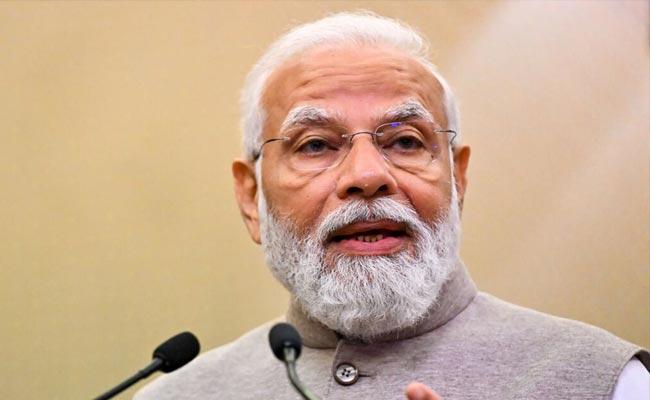
Narendra Modi is often presented as an exception to India’s political tradition. But perhaps the more uncomfortable truth is that Modi is not fundamentally different from few other prime ministers. Governments change, slogans change, personalities change, but the system surrounding political power often remains remarkably similar.
Take Manmohan Singh. He was widely regarded as personally honest, even by many of his political opponents. Modi, too, has not been personally established as corrupt in the conventional sense. He has been clean by all means.
But the real question is bigger than whether a prime minister personally takes money. What happens around the prime minister matters just as much.
The concern today is about the ecosystem of power; influential businessmen, political connections, institutions, banks and the manner in which enormous debts are resolved. These questions did not begin with Modi, nor will they necessarily end with him. They are questions about India’s system itself.
This is precisely why today's post by Vijay Mallya has triggered debate. Mallya questioned how much money had allegedly been recovered from him compared with the judgment debt, while pointing to other large borrowers whose debts were settled for much less. His underlying question was simple; Is the system equally tough on everyone?
His tweet is about Subhash Chandra Goenka who was elected to the Upper House of the Indian parliament for the Haryana state in the 2016 Rajya Sabha election, as an independent candidate supported by legislators from the Bharatiya Janata Party.
Mallya's goes like this, "If True many congratulations to my friend Subhash. Banks and Government have admitted having recovered Rs 14,100 crores from me against a Judgement debt of Rs 6203 crores. Many more borrowers have settled at a fraction. Indian Debt Resolution Justice I presume. No media questions."
The same public debate has emerged around large corporate loan settlements involving prominent businessmen. When thousands of crores are involved, ordinary citizens naturally ask whether the rules applied to a powerful borrower are the same rules applied to them.
For an ordinary Indian, obtaining a bank loan can mean endless paperwork, documentation, guarantees and scrutiny. Missing repayments can bring calls, notices, penalties and enormous pressure. For some families, financial distress has become devastating, even contributing to tragic cases of suicide.
Yet when a powerful businessman’s debt runs into thousands of crores, the vocabulary suddenly changes. It becomes a settlement, restructuring, resolution or waiver. Perhaps these mechanisms are legally valid. But legality alone cannot settle the moral question.
The Gen Z generation is increasingly asking something politicians across parties may not like hearing; Why does the system appear compassionate toward the powerful while remaining unforgiving toward the ordinary borrower?
This cannot simply be blamed on Modi. Similar questions existed during Manmohan Singh’s tenure and under governments before him. The problem is structural. Political influence, banking decisions, corporate power and accountability often intersect in ways ordinary citizens cannot easily understand.
It should be the common citizen versus an unequal system. If India wants public trust, the same standard must apply to the rich, the connected and the ordinary borrower.
Because democracy is not merely about changing the person at the top. It is about changing the rules of the game and making sure those rules apply equally to everyone.
Madhunandan Akkishetty