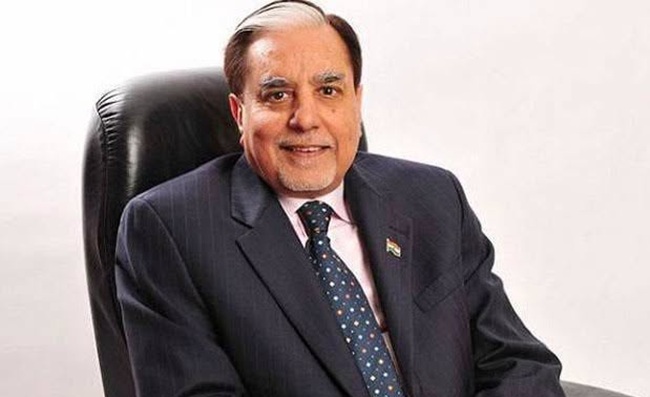
There is one question that simply refuses to disappear in the Subhash Chandra story: where did the Rs 22,006 crore go?
The numbers are not just shocking. They are almost unbelievable.
Creditors had claims of around Rs 22,006.57 crore. Yet the approved resolution provides only about Rs 6.5 crore for distribution.
In simple terms, creditors are recovering roughly three paise for every Rs 100 they claimed.
And after all this, at the age of 75, Subhash Chandra says he plans to begin a new professional chapter by working with investment professionals in Switzerland. He has also spoken about possibly borrowing Rs 2-4 crore from his family to invest in start-ups.
Naturally, people are asking questions.
How does a businessman accumulate liabilities running into more than Rs 22,000 crore, settle them for a tiny fraction of that amount, and then move on to discuss new investments and fresh opportunities?
More importantly, where did the money raised during those aggressive expansion years ultimately go?
There is no established evidence here to claim that money was secretly moved abroad. But that has not stopped speculation on social media, where many are openly questioning whether substantial wealth, assets or business interests remain outside the reach of creditors.
That suspicion may or may not be justified. But the system itself creates room for such doubts when the gap between liabilities and recovery is this enormous.
The real issue is not whether Chandra chooses Switzerland, India or any other country for his next chapter.
The issue is transparency.
If creditors claimed more than Rs 22,000 crore and are eventually recovering just Rs 6.5 crore, the public deserves to understand exactly how this outcome was reached.
Were the loans backed by adequate assets?
Were those assets properly valued?
Were funds lost in failed businesses?
Were they transferred elsewhere?
Were lenders reckless while sanctioning such massive exposure?
And if the money is genuinely gone, who ultimately bears the loss?
These are not unreasonable questions.
The ordinary borrower does not enjoy such luxury. Miss a few home-loan EMIs and banks start calling. Default on a small business loan and assets can be seized. Credit scores collapse. Recovery proceedings begin.
But when thousands of crores are involved, the final recovery can sometimes look almost symbolic.
That contrast is what angers people.
Social media has also raised another uncomfortable question: who offers a 75-year-old businessman a fresh investment role after such a massive debt episode unless he still commands substantial financial connections and influence?
That remains speculation, not fact. But again, the suspicion exists because transparency remains inadequate.
Switzerland’s old reputation for financial secrecy only adds fuel to such theories, even though modern Swiss banking is far more regulated and transparent than it once was.
The bigger problem is not Switzerland.
It is the perception that large businessmen can fail spectacularly, leave creditors carrying almost the entire burden, obtain massive debt relief and still return to public life with influence intact.
If that perception is allowed to grow, public faith in the financial system will suffer.
A Rs 22,006 crore liability ending in a Rs 6.5 crore recovery cannot simply be treated as another technical insolvency outcome.
It deserves a clear explanation.
Because unless the money trail, asset position, lending decisions and settlement process are fully understood, one question will continue to haunt this story:
Where did the Rs 22,006 crore go?