If an ordinary person delays a bike-loan EMI, home-loan payment or even a basic bill, the consequences begin almost immediately. There are repeated phone calls, recovery agents, penalties, a damaged CIBIL score and, in serious cases, notices threatening seizure of assets.
But when the debt runs into thousands of crores, the system often seems to operate very differently.
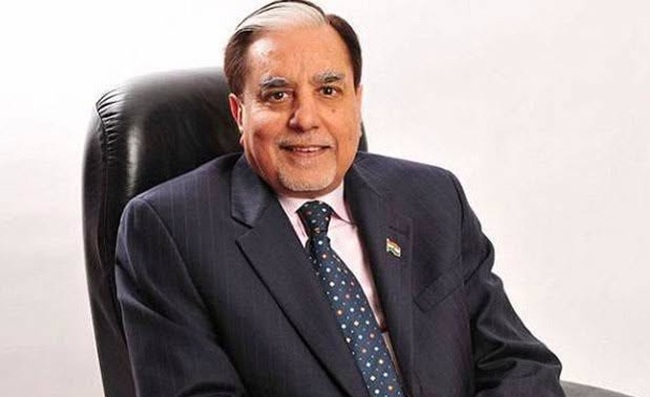
That is why the recent insolvency resolution involving Zee Group founder Subhash Chandra has triggered a wider debate about fairness, accountability and the treatment of large borrowers in India’s financial system.
According to the reported figures, admitted claims in the personal insolvency process stood at around Rs 22,006 crore. The repayment plan approved was only around Rs 6.5 crore.
That means creditors are recovering roughly 0.03 per cent of the admitted claims, while the effective haircut is close to 99.97 per cent.
Put simply, for every Rs 100 owed, lenders are getting back only a few paise.
LIC Housing Finance reportedly objected strongly to the plan after being offered only around Rs 38 lakh against claims of about Rs 1,322 crore. Yet the proposal received the required majority support from creditors, with 80.81 per cent voting in favour, and the NCLT approved it under the legal framework.
The justification is that creditors may recover even less if the debtor is pushed into bankruptcy, because the value of available personal assets may be lower than the amount offered under the resolution plan.
Legally, that may be a valid argument.
But the larger question is whether the outcome looks fair to ordinary citizens.
When thousands of crores were originally lent, what security did the banks examine? What collateral was accepted? What assumptions were made about the borrower’s ability to repay? If, years later, creditors are told that almost nothing can be recovered, should there not also be serious scrutiny of how such enormous loans were sanctioned in the first place?
This is where public anger becomes understandable.
A farmer struggling with a Rs 2 lakh agricultural loan or a small businessman unable to service a modest business loan rarely feels that the system is this flexible. Their defaults can quickly lead to humiliation, pressure from lenders and financial exclusion.
Yet when very large borrowers fail to repay thousands of crores, the law can sometimes produce settlements in which almost the entire debt is written off.
That contrast creates a dangerous perception: one set of rules for the powerful and another for everyone else.
There is also the question of public money. When banks and large financial institutions absorb enormous losses, those losses do not simply disappear. Depending on the lender, they can ultimately affect balance sheets, shareholders, taxpayers, depositors or the government’s need to support the financial system.
Insolvency laws exist for an important reason. They are meant to resolve impossible debt situations, maximise recoveries and prevent endless litigation. A bad asset cannot be made valuable simply by demanding full repayment.
But that does not mean every legally approved outcome should escape public scrutiny.
A decision can be legally valid and still raise serious ethical questions.
The real issue here is not one individual, one company or even one NCLT order. The deeper question is whether India’s credit system places equal responsibility on borrowers, lenders and decision-makers when enormous loans go bad.
If banks repeatedly lend huge sums without adequate safeguards and later accept near-total haircuts, accountability cannot end with the borrower.
Who approved the loans? What collateral was valued? Were warning signs ignored? Were risk controls bypassed? And who ultimately bears the cost?
These are questions the public has every right to ask.
A financial system survives not merely on laws and contracts, but on trust. If ordinary citizens begin to believe that strict repayment discipline applies only to small borrowers while massive defaults receive generous legal exits, that trust will steadily erode.
The debate, therefore, should not be reduced to attacking one businessman or questioning the judiciary.
It should be about a much bigger issue: When Rs 22,000 crore of debt can end with a repayment of just Rs 6.5 crore, who exactly is the system designed to protect?