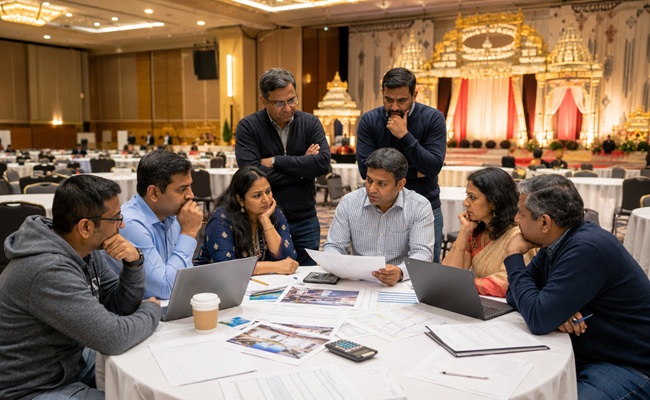
Telugu associations in the United States traditionally organise their flagship conventions once every two years, bringing together thousands of members of the diaspora.
This year, the spotlight is on the 19th ATA Conference, scheduled to be held in Baltimore, Maryland, from July 31 to August 2. However, organising a convention of this scale comes with a daunting challenge: fundraising.
Historically, a significant portion of convention funding has come from real estate sponsors, particularly developers from India.
This year, however, the real estate sector is facing headwinds both in India and the United States, making sponsorship commitments harder to secure.
Another major funding source in the past has been corporate matching grants.
However, following controversies and alleged misuse of matching grant schemes associated with certain organisations in recent years, regulatory agencies such as the FBI and IRS are reportedly keeping a close watch on grant-related activities.
As a result, associations are reluctant to rely heavily on this avenue, while many employees themselves are hesitant to participate due to increased scrutiny and compliance concerns.
The economic climate has further complicated matters. High-earning technology professionals, who often contribute generously and take active leadership roles in convention planning, are currently navigating an uncertain employment environment.
Amid ongoing layoffs and corporate restructuring across the technology sector, many are prioritising financial prudence over discretionary spending and philanthropic commitments.
Even spending valuable time on activities beyond work is often perceived by some as unnecessary or unproductive.
Adding to the challenge is persistent inflation. The cost of hosting large-scale events in the United States has risen dramatically over the past two years.
Venue rentals, logistics, hospitality, entertainment and operational expenses have either doubled or, in some cases, tripled.
Consequently, organisers must raise substantially more funds than in previous conventions merely to maintain the same scale and quality.
Against this backdrop, the upcoming ATA convention presents an important test. How effectively the organisation overcomes these financial and economic hurdles while delivering a meaningful and memorable event remains to be seen.
The success, or failure, of the 19th ATA Conference could serve as a benchmark for future Telugu conventions across North America, offering valuable lessons on how diaspora organisations adapt to changing economic realities.